
By Julie Rose
In today’s blog, we take a break from our standard format and have a little fun imagining a utopian future for market research. Jump with us to 2029, will you? We think you’ll like it!
We’ve jumped in the time machine and 2029 is a new era for market research. Picture this: AI has taken the mundane, repetitive tasks off our hands, freeing insight professionals to focus on creatively connecting insights, telling compelling stories, formulating strategies, and influencing business decisions. Gone are the days of designing surveys from scratch, laboriously cleaning data, and spending weeks on synthesis. The research role has evolved into something greater—part strategist, part AI conductor, and part visionary. Welcome to the golden age of insights.
Synthetic Personas: A New Era of Consumer Insight
In 2029, traditional surveys are feeling as outdated as fax machines. AI-driven synthetic personas have completely changed the game. These AI-generated personas are lifelike, modeled using real consumer data and machine learning, simulating consumer behaviors, preferences, and even emotions with remarkable accuracy. They behave, react, and even feel like real people—without requiring self-reported data or human subjects.
The scalability is mind-blowing. Imagine running thousands of personalized conversations and “what-if” scenarios simultaneously, testing hypotheses, and gathering nuanced feedback in real time.
Additionally, the days of complicated recruitment challenges are gone. Synthetic personas have made it possible to engage with hard-to-reach populations and conduct large-scale research without any privacy concerns.
Multimodal Inputs & Emotional AI: Understanding Consumers on a Deeper Level
Remember when we relied on surveys, focus groups, and social scraping to understand consumer sentiment? By 2029, those methods feel like relics from a distant past. Today, AI uses multimodal inputs like text, video, voice, and even biometric data to give us an authentic view of consumer attitudes, beliefs, and emotions.
For example, emotional recognition tools track subtle cues like facial expressions, vocal tones, and physiological responses in real time. When testing a product or promotional materials, AI can measure a consumer's heart rate and stress levels, bridging the gap between what people say and what they truly feel. This deeper understanding enables brands to craft emotionally resonant products, services, and communications that genuinely connect with their audiences.
Synthetic Data: Privacy-Proof and Scalable Insights
Data privacy concerns used to be a major issue in research, but not anymore. By 2029, synthetic data—artificially generated datasets that mimic real-world data—has become a staple in marketing research. This allows us to test hypotheses, simulate consumer behaviors, and run detailed "what-if" scenarios on a large scale, all without compromising privacy as the analyses do not access any personal (human) data.
Unlike the randomly generated or hallucinated data that was an issue in the past, synthetic data is now created using sophisticated machine learning algorithms that extrapolate patterns from real data to generate highly accurate, privacy-safe datasets. This isn’t new—researchers have always synthesized data—but AI now makes it faster, more accurate, and scalable. As more data is collected and validated, synthetic data models in 2029 are more precise, enabling deeper insights while respecting privacy regulations.
Agent-to-Agent Collaboration: Adapted Research Management
Perhaps the most revolutionary change in 2029 is how AI helps market research teams manage entire research projects. The team has built and now manages digital agents—AI programs designed to mimic human decision-making—to handle the repetitive aspects of a research project. The team sets business and research objectives and high-level questions. From there, digital agents collaborate with one another to execute tasks, analyze data, and refine insights. These agents work tirelessly in the background, leaving the team free to focus on more creative and strategic aspects, like storytelling, providing actionable recommendations linked to the business context, and building client relationships.
This isn’t about replacing humans; it’s about empowering them. By automating the basic operational tasks, AI gives us more time to dream big and think creatively.
Driving Action & Outcomes: AI-Enhanced Storytelling
In 2029, AI is an essential partner in crafting compelling narratives from raw data. Gone are the days of manually structuring reports or laboring over visualizations. Today, AI systems instantly outline story arcs, recommend the best supporting data, and generate tailored presentations depending on the audience. With the guiding hand of Content Strategists, AI delivers high-level insights to C-Suite audiences and produces more detailed reports for technical teams.
The most exciting development? AI-powered immersive presentations. Using augmented and virtual reality, Research Strategists (with the support of Content Strategists) guide stakeholders through dynamic, interactive experiences, allowing them to explore insights in a hands-on way. This revolutionizes the presentation experience, making it more engaging and impactful than the static reports of the past. The result? Stakeholders leave every presentation engaged, informed, and ready to act.
Humane AI: A Future of Ethical, Mindful Collaboration
Back in 2024, many feared AI—worried about bias, transparency, and job security. But by 2029, those concerns have faded. Rigorous regulations ensure that AI systems are ethical, transparent, and fair. Continuous audits minimize bias and guarantee that AI tools uphold the highest standards of integrity.
Rather than replacing us, AI complements our skills. Researchers who embraced AI early on have found themselves thriving. Together, humans and AI form a powerful partnership, pushing the boundaries of what market research can achieve.
The Researcher’s Elevated Role: Creative, Strategic Visionaries
In 2029, our favorite part of being a researcher is the freedom to focus on what we love most: strategy, insights, and relationship-building. AI handles tedious, repetitive tasks, giving us the space to drive business impact in ways we never thought possible.
The role of the researcher has evolved. We’re no longer data processors or survey designers—we’re storytellers, strategists, and visionaries. AI enhances our work, allowing us to uncover insights faster, more accurately, and with greater depth than ever before.
Are You Ready for the Future?
The future of market research isn’t coming - it’s already here and getting better every day. At SIVO, we’re embracing this transformation with open arms, empowering our team and clients to thrive in this exciting new era. Together, we can unlock the full potential of AI and create a better, brighter future for our industry.
Are you ready to join us on this journey? Let’s build the future together. Contact us at Contact@SIVOInsights.com or visit SIVOInsights.com to schedule a discovery today.
SIVO is thrilled to present The SIVO Insights Forum, an on-demand panel discussion with esteemed Insights executives. You’re invited to tune in here!
https://www.youtube.com/watch?v=KX3aO1k61QE
The lively conversation focuses on “Bridging The Gap: Translating Insights Into Meaningful Business Results" with industry leaders:
Learn from world-class Insights leaders as they discuss:
Feel free to share with your team and reach out with any questions that spark as you watch!
About SIVO:
SIVO is a global insights and strategy firm specializing in understanding people and their needs and beliefs that drive behavior. We partner with world-class brands to answer key questions that fuel business growth and innovation.
To Know Thyself is the Beginning of All Wisdom [Aristotle]… and as it turns out, it’s also the beginning of your Brand Strategy
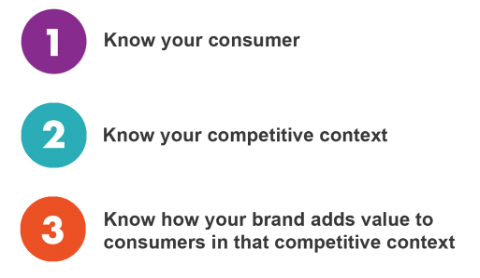
At SIVO Insights, we spend a lot of time helping our clients understand who their consumers are, what they need and why. It is just as important to help our clients understand the competitive context within which they operate, to understand where and how their brands can differentiate and create an ownable competitive advantage.
We work with our clients using a three-pronged approach to set a solid brand strategy:
A simple exercise that teams can use to consider and articulate the market that their brand best competes in, is the “Big Box, Little Box” Model.

In this model, teams define the market, or “Little Box” that they believe their brand currently operates in, and what benefits they distinctly deliver to that market. Next, the team considers a broader market definition, the “Big Box”, to understand who is in the brand’s expanded list of competitors and what benefits their product could distinctly deliver in that broader context. By doing this exercise, the team broadens their view of who they are truly competing with and where they can source volume. This helps teams reframe how they present their brand and its ownable benefits to the world. i.e., the brand positioning, which in turn, impacts future renovation, innovation, and communication efforts.
Trending
Do customers want to ‘hire’ your product?
A team that manages a coffee brand might define their “Little Box” as the Coffee category. In that competitive context, the team will likely focus on functional coffee benefits such as richest flavor or best price, to compete with other coffee brands. But when they broadened their view of the competitive context to the “Big Box”, they might find that they are competing with the broader ‘caffeinated beverage’ market. In this context, the key benefits that the team may focus on to differentiate and compete with caffeinated sodas and energy drinks would be things like “warmth, comfort, and enabling your morning ritual.”
The big box, little box model allows teams to…
Discover who they are truly competing with
Reframe their brand strengths within the broader, and likely more accurate, competitive context
Identify which brand benefits are most ownable and distinctive vs. the competitive set
Reconsider who their target consumer is and how to position the brand to meet the needs of this larger consumer target group
Our experts can…
Facilitate a Big Box/Little Box exercise with your team
Execute a qualitative exploration to understand where your brand truly competes
Execute an Attitude and Usage (A&U) study to quantify which competitive products/categories are true competitors
Facilitate a workshop, using the learning above, to rethink and redefine brand strategy
Contact us at Contact@SIVOInsights.com for more information and next steps.
What is a Consumer Target
At the foundation of all great marketing initiatives is a complete and deep understanding of the consumer target. The consumer target is a specific and detailed description of the type of person who has needs or desires that you believe can be served or helped with your products or services. Truly identifying and understanding the consumer target can inspire creative and innovative thinking to help grow your brand through new products, marketing campaigns, or promotions that fulfill their needs and wants.
Segmenting the Market to Identify Your Consumer Target
Teams must be focused and clear about who their consumer target is and is not. This consumer does not represent everyone that purchases your product or service.
A typical first step to identifying your consumer target is to segment the market you operate in. Market or consumer segmentation is a market research approach that allows you to divide the universe of potential consumers into smaller groups or segments based on their characteristics. The segments are composed of consumers who will respond similarly to marketing strategies because they have shared demographics, needs, interests, values and/or locations. Once the market has been segmented, an assessment is required to understand which segment of consumers offer the most potential for growth, i.e., which group is most likely to find value and be motivated by your business proposition and respond to your initiatives, across the 4Ps of product, placement, pricing, and promotion.
Building Knowledge About Your Consumer Target
While segmentation is a great first step in identifying your consumer target, it is only the beginning. Every day you will be faced with making business decisions based on what you know about your consumer target and how you think they will respond to your actions. You should have basic knowledge covering five key areas:
Answering these questions requires a combination of sales data analyses, quantitative assessments such as, attitude and usage studies plus, qualitative, or observational techniques such as, in-depth interviews, in-store shop-alongs, and in-home ethnographic research to fully immerse in how your consumer target thinks, lives and shops. Oftentimes, this is referred to as developing the consumer target persona.
Building Consumer Empathy
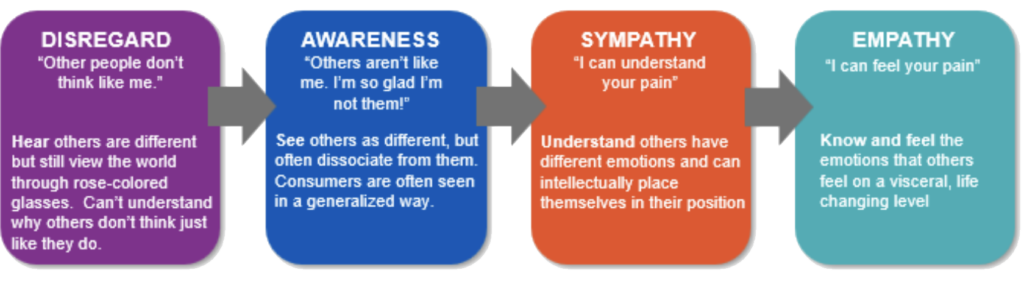
The ultimate goal is to build empathy for and intuition about your consumer target. You need knowledge to understand what is in their head (how they think) and empathy to understand what is in their hearts (how they feel and their underlying motivations). Most of the time, you yourself are not the target consumers so you must spend time with them to truly understand their lives, values, beliefs, and behaviors. The goal should be to move through the following spectrum to be able to genuinely empathize with your consumer target.
How to Get to Empathy for Your Consumer Target
Building empathy is different from conducting a typical market research study. Market research is designed to answer specific business questions by getting feedback and perspective from consumers. For instance, you might conduct market research to understand how your product compares to the competition or what product varieties you should launch next.
An empathy trek is solely designed to gain better understanding of who your consumer target is. It is a listening and observation exercise, designed to help you “walk in their shoes” and “feel what they feel.” In an empathy trek, you’ll explore how your consumer target lives, what they value, believe and how they behave. By building consumer empathy, you will build your intuition about them, and are able to make business decisions on their behalf.
The Value of Truly Knowing Your Consumer Target
The value of building empathy for your consumer target is tremendous. Specifically, it can:
Your Source for Expert Consumer Insights
As you and your team learn more about your consumer, your marketing and innovation ideas will get more targeted at serving their needs, which will in turn, make them more successful. Ideally, you will be able to reach them at key moments of truth, physically or digitally with personalized content that improves the brand experience and loyalty.
At SIVO, we are dedicated to helping our clients identify and understand their consumer target’s perceptions, needs, beliefs, and behaviors. We create learning plans that will help you gain valuable insights by applying the right approaches to identify your market segments, consumer target persona and to build consumer empathy for you and your team.
Contact us via our website form or email us at Contact@SIVOInsights.com today to schedule a discovery call!
Wondering how to facilitate a strategic planning session? Strategic planning facilitation allows you to gain valuable insights from your organization, create a plan, and build strategies to achieve your goals. These exercises are a vital part of any organization's success, and with SIVO Organizational Intelligence, it has never been easier to create a strong foundation for your business. Explore the benefits of holding a strategic planning session within your team below.
First thing’s first, what is strategic planning? Strategic planning is a process used by organizations to set their short or long-term goals, determine their strengths and weaknesses, and create a blueprint to achieve those goals. It is an opportunity for leadership teams to align their vision, mission, and values and build the company's future plans and strategies. Strategic planning facilitation is the engine to the car that drives plans and strategies.
A strategic plan helps determine an organization's future, ensuring that all employees are working towards the same goals. It helps to prioritize resources and allocate them to areas that will bring the most value to the company. Additionally, it helps organizations identify areas for improvement, stay ahead of the competition, and make data-driven decisions.
So, we know what strategic planning is and we know why it matters -- but what is the best way to implement it? A best practice to gather and leverage insights is to have a third-party facilitator manage and facilitate your your strategic planning. This allows teams to participate in the planning discussion, rather than preparing for and guiding the discussion. Facilitators can also document the discussion as it happens, to focus teams on the topic and guide the discussion toward valuable outcomes.

Diving into this process is no small task. Luckily, with the help of a facilitator it becomes much more manageable because you have someone to handle the preparation, session facilitation, documentation and recap of the plan and outcomes. With an expert facilitator as your guide, you will leave your session with a Strategic Plan that will:
This is your opportunity to bring key leaders in the organization together to discuss the company's future. It helps to align everyone's goals and objectives, so everyone is working towards the same vision. Often, individual team members bring a unique perspective to the planning session. That’s why it’s important to discuss their expectations, the current and potential challenges and opportunities that each leader faces, as well as external market forces that may impact the strategic plan. Discussing these inputs during the session allows the team to address key issues and avoid pitfalls as the plan is being developed.
Strategic planning helps organizations identify areas for improvement and opportunities that will bring the most value to the company. These process-driven decisions can fall to the wayside without a dedicated space to identify internal and external opportunities and build plans to achieve them. . The planning process leads to increased effectiveness, efficiency and a better return on investment.
Strategic planning allows organizations to prioritize their resources, ensuring they are used in the most effective way possible, to achieve the company goals. Expert-led planning exercises can uncover redundancies and slowdowns within current processes. The strategic plan can help to increase efficiency by reprioritizing resources to align with key opportunities.
By having a clear roadmap for the future, leaders can make data-driven decisions that are in line with their goals and objectives. The strategic plan provides focus and clarity and it helps to reduce the risk of making poor decisions that could harm the organization in the long run.
Remaining competitive in your industry requires consistent reevaluation and reimagination. From identifying issues in current workflows, to hearing ideas from team members, to researching emerging trends in your industry and related industries -- there are so many opportunities to enhance your organization and get ahead. This information is used as inputs into the planning session, to help you build a strategic plan that addresses key issues and capitalizes on the best opportunities to grow the business and gain market share.
When employees understand the company's plans and strategies, they are more likely to be engaged and motivated to contribute to the organization's success. Chances are, they also have valuable thoughts on areas for opportunity and improvement. That’s why it can be very valuable to include employee insights in the strategic planning process. It can unlock game-changing opportunities that company leaders may have overlooked. Plus, gathering employee feedback can improve company culture and create a positive work environment by improving employee morale.
Strategic planning provides a roadmap for the future, ensuring that everyone in the organization is working towards the same goals. This helps to ensure that the organization remains on track and empowered to achieve its long-term objectives. SIVO’s Organizational Intelligence provides the tools to create a rock-solid plan for your business, so you can execute, and get ahead.

SIVO Organizational Intelligence is a trusted partner for organizations looking to leverage strategic planning. In our strategic planning sessions, SIVO's expert facilitators listen and probe to understand your organization’s needs and goals. Then, we help you develop a comprehensive plan with strategies to grow your business and win in the marketplace.
By working with SIVO, your team can leverage experts with 20 years of experience, across industries and company sizes, in organizational development and strategic planning facilitation. Our strategy and market research firm creates custom solutions that meet the unique needs of our clients.
Could your business benefit from our insights and expertise? Get in touch with our Organizational Intelligence team to schedule a discovery call. SIVO will develop a custom Organizational Intelligence solution that aligns with your needs so you can get ahead.
SIVO Insights brings together research, talent, and intelligent technology to help organizations navigate complexity with confidence. Have a business challenge? Let's talk!
We bring together research, talent, and intelligent technology to help organizations navigate complexity with confidence