
by Julie Rose
Did somebody say recession? Unfortunately, recessions are a normal part of the business cycle. There are periods of economic growth and periods of economic slowdown. During a recession, the economy slows, companies struggle with sales, people lose their jobs, and the stock market suffers. The point where the economy officially falls into a recession depends on multiple factors, but many experts indicate that two consecutive quarters of decline in Gross Domestic Product (GDP) is a sign of recession. The recession in 2020 occurred when the pandemic impacted our economy. The Great Recession in 2008 was caused by the collapse of the housing market. We are seeing signs for the next recession too, with some experts predicting late 2022 or early 2023. According to the Washington Post, the economy contracted in the first three months of 2022, by shrinking at a 1.4 percent pace.
Source: https://www.washingtonpost.com/business/2022/05/19/recession-economy-markets/
One common result of recession is that unemployment rises. Companies sometimes employ “hiring freezes” to maintain profits, while they wait for the economy to stabilize. This puts stress on the rest of the workforce so companies must look for ways to protect their current employees from burnout while also ensuring the most critical work gets done.
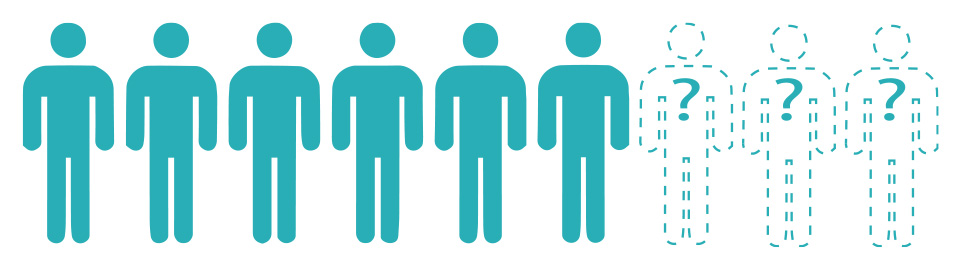
It’s common for businesses today to look for creative ways to expand their bandwidth to continue to achieve short and long-term goals. For companies that don’t want to make the long-term commitment of hiring full-time employees or are trying to conserve budgets, hiring temporary or “on demand” professionals is a low-risk, cost-effective option.
Recession-Proof Insights Talent from SIVO On Demand Talent
SIVO On Demand Talent can help with skilled Consumer Insight and Market Research Professionals that ease your team’s workload and help you achieve your business goals while also relieving you of the financial risk that is common during a recession.

We offer flexible solutions, like short or long-term assignments for fill-in roles or finite projects. Additionally, we can serve as an extension of your internal Consumer Insights Team, what we like to call your “back-pocket” consultants. For some clients, our talent serves as the virtual CI team, supporting initiatives in a cost-effective way while also ensuring high quality insights.
SIVO On Demand Talent offers far more flexibility than full-time employee expansion. Plus, you don’t have to spend your valuable time searching for, hiring, and training talent. We take care of it all for you, freeing you from the burden of a lengthy process.
Let SIVO help you manage through the ‘hiring freeze” by temporarily meeting your Insights, Analytics or Market Research talent needs.
Reach out to ondemandtalent@sivoinsights.com for a consultation.
By Julie Rose
In today’s blog, we take a break from our standard format and have a little fun imagining a utopian future for market research. Jump with us to 2029, will you? We think you’ll like it!
We’ve jumped in the time machine and 2029 is a new era for market research. Picture this: AI has taken the mundane, repetitive tasks off our hands, freeing insight professionals to focus on creatively connecting insights, telling compelling stories, formulating strategies, and influencing business decisions. Gone are the days of designing surveys from scratch, laboriously cleaning data, and spending weeks on synthesis. The research role has evolved into something greater—part strategist, part AI conductor, and part visionary. Welcome to the golden age of insights.
Synthetic Personas: A New Era of Consumer Insight
In 2029, traditional surveys are feeling as outdated as fax machines. AI-driven synthetic personas have completely changed the game. These AI-generated personas are lifelike, modeled using real consumer data and machine learning, simulating consumer behaviors, preferences, and even emotions with remarkable accuracy. They behave, react, and even feel like real people—without requiring self-reported data or human subjects.
The scalability is mind-blowing. Imagine running thousands of personalized conversations and “what-if” scenarios simultaneously, testing hypotheses, and gathering nuanced feedback in real time.
Additionally, the days of complicated recruitment challenges are gone. Synthetic personas have made it possible to engage with hard-to-reach populations and conduct large-scale research without any privacy concerns.
Multimodal Inputs & Emotional AI: Understanding Consumers on a Deeper Level
Remember when we relied on surveys, focus groups, and social scraping to understand consumer sentiment? By 2029, those methods feel like relics from a distant past. Today, AI uses multimodal inputs like text, video, voice, and even biometric data to give us an authentic view of consumer attitudes, beliefs, and emotions.
For example, emotional recognition tools track subtle cues like facial expressions, vocal tones, and physiological responses in real time. When testing a product or promotional materials, AI can measure a consumer's heart rate and stress levels, bridging the gap between what people say and what they truly feel. This deeper understanding enables brands to craft emotionally resonant products, services, and communications that genuinely connect with their audiences.
Synthetic Data: Privacy-Proof and Scalable Insights
Data privacy concerns used to be a major issue in research, but not anymore. By 2029, synthetic data—artificially generated datasets that mimic real-world data—has become a staple in marketing research. This allows us to test hypotheses, simulate consumer behaviors, and run detailed "what-if" scenarios on a large scale, all without compromising privacy as the analyses do not access any personal (human) data.
Unlike the randomly generated or hallucinated data that was an issue in the past, synthetic data is now created using sophisticated machine learning algorithms that extrapolate patterns from real data to generate highly accurate, privacy-safe datasets. This isn’t new—researchers have always synthesized data—but AI now makes it faster, more accurate, and scalable. As more data is collected and validated, synthetic data models in 2029 are more precise, enabling deeper insights while respecting privacy regulations.
Agent-to-Agent Collaboration: Adapted Research Management
Perhaps the most revolutionary change in 2029 is how AI helps market research teams manage entire research projects. The team has built and now manages digital agents—AI programs designed to mimic human decision-making—to handle the repetitive aspects of a research project. The team sets business and research objectives and high-level questions. From there, digital agents collaborate with one another to execute tasks, analyze data, and refine insights. These agents work tirelessly in the background, leaving the team free to focus on more creative and strategic aspects, like storytelling, providing actionable recommendations linked to the business context, and building client relationships.
This isn’t about replacing humans; it’s about empowering them. By automating the basic operational tasks, AI gives us more time to dream big and think creatively.
Driving Action & Outcomes: AI-Enhanced Storytelling
In 2029, AI is an essential partner in crafting compelling narratives from raw data. Gone are the days of manually structuring reports or laboring over visualizations. Today, AI systems instantly outline story arcs, recommend the best supporting data, and generate tailored presentations depending on the audience. With the guiding hand of Content Strategists, AI delivers high-level insights to C-Suite audiences and produces more detailed reports for technical teams.
The most exciting development? AI-powered immersive presentations. Using augmented and virtual reality, Research Strategists (with the support of Content Strategists) guide stakeholders through dynamic, interactive experiences, allowing them to explore insights in a hands-on way. This revolutionizes the presentation experience, making it more engaging and impactful than the static reports of the past. The result? Stakeholders leave every presentation engaged, informed, and ready to act.
Humane AI: A Future of Ethical, Mindful Collaboration
Back in 2024, many feared AI—worried about bias, transparency, and job security. But by 2029, those concerns have faded. Rigorous regulations ensure that AI systems are ethical, transparent, and fair. Continuous audits minimize bias and guarantee that AI tools uphold the highest standards of integrity.
Rather than replacing us, AI complements our skills. Researchers who embraced AI early on have found themselves thriving. Together, humans and AI form a powerful partnership, pushing the boundaries of what market research can achieve.
The Researcher’s Elevated Role: Creative, Strategic Visionaries
In 2029, our favorite part of being a researcher is the freedom to focus on what we love most: strategy, insights, and relationship-building. AI handles tedious, repetitive tasks, giving us the space to drive business impact in ways we never thought possible.
The role of the researcher has evolved. We’re no longer data processors or survey designers—we’re storytellers, strategists, and visionaries. AI enhances our work, allowing us to uncover insights faster, more accurately, and with greater depth than ever before.
Are You Ready for the Future?
The future of market research isn’t coming - it’s already here and getting better every day. At SIVO, we’re embracing this transformation with open arms, empowering our team and clients to thrive in this exciting new era. Together, we can unlock the full potential of AI and create a better, brighter future for our industry.
Are you ready to join us on this journey? Let’s build the future together. Contact us at Contact@SIVOInsights.com or visit SIVOInsights.com to schedule a discovery today.
by Cindy Blackstock
In Part 1 of our Jobs Theory series, we described how uncovering the underlying needs and motivations of consumer decisions leads to new opportunities for product innovation, renovation and positioning/messaging. Now let’s dig into the keys to success for Consumer Job Mapping.
“Jobs to Be Done” mapping works for all industries and any products or service to create a competitive advantage for your company or brand. There are a few points to consider when embarking on jobs discovery:
There are multiple ways to understand your consumer: in-home observation, longitudinal diaries, one-on-one interviews, in-context intercepts, etc. The optimal approach should be customized for your objectives and your consumers.
Enlist an experienced researcher to listen and interpret your consumers’ words and behaviours to identify the Job. For example, consumers cannot answer the question “What job are you hiring this face cream for?” Asking the right questions in the right way is key to uncovering hidden motivations.
A jobs map will be comprised of multiple jobs ranging from functional to emotional. Ensure each job has been defined – or structured – with context, motivation, and desired outcome. For example, a consumer statement such as “When (the situation) … I want / need (the motivation) … so I can (outcome).
Go beyond just identifying the job. Use activation sessions to translate the Jobs to address your team’s business goals. For example, mapping competitors against your jobs map identifies “white space” opportunities for new product innovation.

At SIVO, we have successfully helped our clients identify opportunities with Job Mapping including white space and positioning opportunities to win in the market place. Here are a few examples to bring it to life.

Innovate in an existing category
OPPORTUNITY: A food manufacturer wanting to find white space in the hot snack category to grow sales and earn a bigger share of consumers’ wallets.
SIVO APPROACH: We used a multi-phased approach to get a comprehensive view into the lives of their consumers. This included mobile journals, in-home ethnographies, in-store intercepts and product user immersion.
RESULT: With the Jobs Map framework, the client was easily able to identify and prioritize jobs signalling white space opportunities, and that led to the launch of a new and unique product to the hot snacks category.

Communicate with your target
OPPORTUNITY: An apparel supplier needed to more fully understand a new consumer target to develop effective messaging.
SIVO APPROACH: We dug deep with both consumers and the sales team to uncover hidden motivations for apparel purchases. We designed an approach that used online boards to capture longitudinal learning (multiple days of apparel choice) followed with webcam focus groups to dig deeper on what was uncovered during the online board.
RESULT: We learned how the target consumer “hired” her apparel and accessories to convey her personal style. This discovery was then reflected in our client’s Facebook and Instagram posts with a focus on the finer details and accessories that are unique to this apparel brand.

Position your new product
OPPORTUNITY: A tech start-up had developed a training app for athletes and were preparing for their next wave of fundraising. They needed to demonstrate they knew their target consumer and how to communicate with them. The company had a hypothesis around what their target consumer was looking for but needed to be sure.
SIVO APPROACH: We needed to capture the First Moment of Truth when exposed to the app and the Second Moment of Truth after using the app. We combined one on one interviews capturing the immediate reaction to the app, followed by a 2-week diary using the app, then one-on-one interviews to learn about the experience.
RESULT: SIVO uncovered an new consumer job, “I want to train like a pro” which was more compelling than the client’s original positioning for the App. The client shifted the messaging, in their introductory video, to focus on this job.
Are you ready to uncover, activate and deliver on your consumers’ jobs through data-driven product evaluation services? Please reach out to SIVO and we will help you build a Consumer Job Map that is full of opportunities to grow your business!
by Cindy Blackstock
Have you had a conversation with your consumer?
It is an enlightening and humbling experience to really get to know who they are, what they think, how they experience your product or service, and what they need from that experience. It can be very beneficial to be face to face, having conversations with consumers to build your intuition and empathy. However, often it is more valuable to leave the interviewing to expert moderators, allowing you to focus on the answers, rather than how to pose the questions.
Why Use Experts Qualitative Research Moderators
Expert qualitative research Moderators are skilled at conducting qualitative research to uncover the “why” behind the “what” of consumer behavior and preferences. Experienced Moderators apply a range of specific research techniques, with nuance and finesse, to get beyond consumers’ top-of-mind thoughts. This allows them to identify the underlying needs and motivations that drive behaviors and choices.
Specifically, Moderators can help teams across four key learning dimensions:
Moderation Techniques Enable Insights to Surface
With certifications from organizations such as, RIVA, QRCA, and the Insights Association, great Moderators have a broad toolkit, employing specific qualitative research techniques to achieve their research objectives. These research techniques include:
Open-Ended Questions: Starting with open-ended questions that encourage participants to provide detailed responses. These questions typically begin with phrases like “Can you describe…” or “Tell me about…”
Comparative Questions: Asking participants to compare or contrast different aspects of their experiences or opinions. For example, “How does this compare to your previous experience in a similar situation?”
Timeline and Sequencing: Exploring the chronological aspects of experiences by asking participants to recount events in a specific order. This can help create a detailed narrative.
Sensory Exploration: Encouraging participants to describe sensory aspects of their experiences, such as what they saw, heard, felt, or smelled during a particular event.
Metaphorical or Analogical Questions: Asking participants to describe their experiences using metaphors or analogies. This can help participants express complex concepts more vividly. For example, “If this brand was a shoe, what kind of shoe would it be and why?”
Projective Techniques: Using projective techniques like storytelling, drawings, or role-playing to access participants’ subconscious thoughts and feelings.
Whether it is through in-depth interviews, in-context missions, ethnographic research or through online community bulletin boards, great Moderators will employ these techniques to discover underlying insights about the consumer that they could not otherwise articulate through simple conversations.
Trust SIVO with your Qualitative Research
Contact SIVO, Inc. at Contact@SIVOInsights.com to discuss how SIVO can provide you with the insights you need, via our team of expert Moderators to lead your qualitative research projects. Also, check out SIVO’s On Demand Talent Profiles to learn more about how a fractional Qualitative Research Strategist/Expert Moderator can be an asset to you and your team.
As customer needs evolve and competition intensifies, traditional segmentation frameworks often fall short. Many segmentation models are based on demographics and psychographics, and often define customers based on traits such as their age, gender, attitudes and values. They tell you who your consumer is – but not why they make the choices they do.
To fuel meaningful, strategic growth, businesses need more than demographic snapshots. They need contextual insight. This is where frameworks like Demand Space thinking comes in.
Demand Space frameworks shift the focus from static consumer traits to the moments that drive decisions. Instead of defining your audience only by traits such as age, gender, or income, this approach considers:
It’s not about who your consumer is on paper – it’s about what’s happening around them, and inside them, when they make choices.
Consumers don’t always behave the same way, even when they share similar traits on paper. A single person has different needs and behaviors throughout the day, week, or year, and traditional segmentation often misses these moments that drive real-world decisions. Demand Spaces, on the other hand, are based on the moments where context, emotion, and need converge.
When implemented thoughtfully, Demand Spaces help businesses:
Demand Spaces help businesses find the moments when consumers are underserved by existing options. These blind spots often become the clearest opportunities for growth. By identifying emotional or contextual gaps in the consumer experience, teams can design solutions that respond to real pain points and not using assumptions.
They also help businesses go beyond what consumers say they want and uncover what they actually need in specific situations. This helps teams design offerings that better reflect real-world behaviors. It’s a way to spark smarter ideas, grounded in daily routines, shifting priorities, and overlooked occasions that traditional research often misses.
Demand Space tools help position brands based on context and need, not just category. This reduces overlap and creates clearer brand roles. That means brands can carve out distinct emotional territory, ensuring each one plays a defined role in the consumer’s life, not just on a shelf.
By focusing efforts on the most critical consumer moments – when the stakes, emotions, or needs are highest – teams can prioritize smarter. It enables brands to align resources with the occasions that drive the most value, loyalty, or conversion – improving both focus and ROI.
They also help in assigning each brand, product, or service distinct moments. This ensures they serve different needs or occasions rather than competing for the same ones. By separating who serves what – and when – demand spaces bring clarity to brand architecture and reduce inefficiencies across portfolios.
Demand Spaces help businesses unlock growth by bringing clarity to what consumers need, when they need it, and why. Instead of chasing broad segments or spreading resources thin, brands can focus on the moments that truly drive behavior – revealing new opportunities, reducing internal friction, and building solutions that resonate in the real world.
Let’s say your target is a 35-year-old parent who regularly shops for snacks. Depending on the situation, they might want:
Each moment carries different emotional and functional needs – and may lead them to choose entirely different brands or products. This is the nuance Demand Spaces capture.
In a challenging market, brands can’t afford to rely on guesswork. Demand Spaces provide both smarter lenses for targeting and innovation, a more human understanding of consumer behavior, and a faster path to discovering what will actually drive choice – and growth.
To identify and activate demand spaces, brands need to move beyond static surveys. Instead, they should use context-rich research tools like:
These are some of the methods that help businesses capture real consumer behavior, in real environments. At SIVO, we combine deep qualitative expertise with flexible research models to help you map the demand spaces that matter most to your business. Whether you're reassessing brand positioning, exploring whitespace for innovation, or trying to understand behavior shifts in today’s market – we help you with the right tools and insights for your business.
Want to talk about how Demand Space research can unlock strategic clarity for your team?
We’d love to help!
SIVO Insights brings together research, talent, and intelligent technology to help organizations navigate complexity with confidence. Have a business challenge? Let's talk!
We bring together research, talent, and intelligent technology to help organizations navigate complexity with confidence