
Context. Clarity. Conviction. Consider these your driving factors for presenting Insights that shape strategic business decisions. Eliana Wahnon (General Mills, VP of Consumer & Market Insights) recently joined The SIVO Insights Forum to share her expertise.
Let’s dive deeper into the framework Eliana uses:
https://youtu.be/Yv8JdvFvILY
Tune into a lively on-demand conversation “Bridging The Gap: Translating Insights Into Meaningful Business Results" to hear from Eliana and other Insights experts including Khary Campbell (Comcast, VP of Consumer Research & Insights) and Elizabeth Oates (Book Author, and former Ulta Beauty VP of Consumer Insights.)
Learn from Insights leaders as they discuss:
Special shout out to Natasha Weith, VP of Research at SIVO Inc. for hosting The SIVO Insights Forum!
What is a Consumer Target
At the foundation of all great marketing initiatives is a complete and deep understanding of the consumer target. The consumer target is a specific and detailed description of the type of person who has needs or desires that you believe can be served or helped with your products or services. Truly identifying and understanding the consumer target can inspire creative and innovative thinking to help grow your brand through new products, marketing campaigns, or promotions that fulfill their needs and wants.
Segmenting the Market to Identify Your Consumer Target
Teams must be focused and clear about who their consumer target is and is not. This consumer does not represent everyone that purchases your product or service.
A typical first step to identifying your consumer target is to segment the market you operate in. Market or consumer segmentation is a market research approach that allows you to divide the universe of potential consumers into smaller groups or segments based on their characteristics. The segments are composed of consumers who will respond similarly to marketing strategies because they have shared demographics, needs, interests, values and/or locations. Once the market has been segmented, an assessment is required to understand which segment of consumers offer the most potential for growth, i.e., which group is most likely to find value and be motivated by your business proposition and respond to your initiatives, across the 4Ps of product, placement, pricing, and promotion.
Building Knowledge About Your Consumer Target
While segmentation is a great first step in identifying your consumer target, it is only the beginning. Every day you will be faced with making business decisions based on what you know about your consumer target and how you think they will respond to your actions. You should have basic knowledge covering five key areas:
Answering these questions requires a combination of sales data analyses, quantitative assessments such as, attitude and usage studies plus, qualitative, or observational techniques such as, in-depth interviews, in-store shop-alongs, and in-home ethnographic research to fully immerse in how your consumer target thinks, lives and shops. Oftentimes, this is referred to as developing the consumer target persona.
Building Consumer Empathy
The ultimate goal is to build empathy for and intuition about your consumer target. You need knowledge to understand what is in their head (how they think) and empathy to understand what is in their hearts (how they feel and their underlying motivations). Most of the time, you yourself are not the target consumers so you must spend time with them to truly understand their lives, values, beliefs, and behaviors. The goal should be to move through the following spectrum to be able to genuinely empathize with your consumer target.
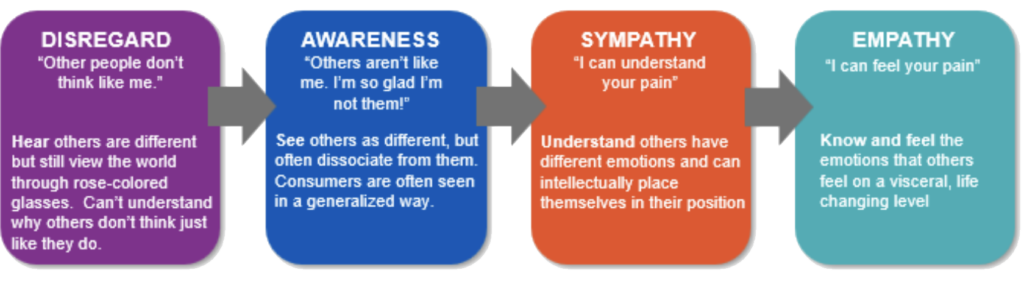
How to Get to Empathy for Your Consumer Target
Building empathy is different from conducting a typical market research study. Market research is designed to answer specific business questions by getting feedback and perspective from consumers. For instance, you might conduct market research to understand how your product compares to the competition or what product varieties you should launch next.
An empathy trek is solely designed to gain better understanding of who your consumer target is. It is a listening and observation exercise, designed to help you “walk in their shoes” and “feel what they feel.” In an empathy trek, you’ll explore how your consumer target lives, what they value, believe and how they behave. By building consumer empathy, you will build your intuition about them, and are able to make business decisions on their behalf.
The Value of Truly Knowing Your Consumer Target
The value of building empathy for your consumer target is tremendous. Specifically, it can:
Your Source for Expert Consumer Insights
As you and your team learn more about your consumer, your marketing and innovation ideas will get more targeted at serving their needs, which will in turn, make them more successful. Ideally, you will be able to reach them at key moments of truth, physically or digitally with personalized content that improves the brand experience and loyalty.
At SIVO, we are dedicated to helping our clients identify and understand their consumer target’s perceptions, needs, beliefs, and behaviors. We create learning plans that will help you gain valuable insights by applying the right approaches to identify your market segments, consumer target persona and to build consumer empathy for you and your team.
Contact us via our website form or email us at Contact@SIVOInsights.com today to schedule a discovery call!
As 2026 planning season approaches, most leaders are focused on big decisions: where to invest, how to grow, and which bets to place. But the strongest strategies don’t begin with goals, they begin with your consumers.
In fact, the annual planning season is the perfect time to pressure-test assumptions. Before you finalize budgets or commit to growth strategies, it pays to refresh your understanding of today’s consumer landscape. What’s changed? What’s emerging? And what gaps in understanding could derail your decisions?
This post outlines how to approach annual planning through the lens of consumer truth, so you can build smarter, more aligned strategies. Let’s dive in!
For many organizations, planning still begins with internal goal-setting: revenue and profit targets, innovation and growth priorities, and cost cutting. And high-performing teams know that successful strategy isn’t just about setting ambition, it’s about aligning that ambition to current market conditions.
Consumer behavior is one of the most dynamic variables in that equation, and often, one of the most overlooked. Market assumptions that were true a year ago may no longer apply. Purchasing patterns, motivations, and category expectations can shift quickly, especially in volatile economic environments like the current one. And if your plan doesn’t reflect those changes, it’s much more likely to underperform.
This consumer-centric understanding is foundational. It informs product decisions, pricing, messaging, innovation, and channel strategy. Without it, even well-intentioned plans can quickly drift out of sync with real consumer needs. Starting with the consumer also accelerates alignment. It gives cross-functional teams, from marketing to finance to sales, a shared understanding of where the business is heading and why. It moves planning conversations from opinion to evidence and from speculation to strategy.
If the case still isn’t clear, consider this: even well-resourced plans fail when they aren’t aligned with current consumer behavior. It’s often not about effort or execution, it’s about starting with the right inputs. Let’s look at a few examples:
Outdated consumer insights can lead to misdirected efforts, misaligned messaging, missed opportunities, and unnecessary risk. To illustrate what this looks like in practice, here are two common scenarios where strategy easily goes off track because the consumer context was never fully validated.
A company sets aggressive growth targets and decides to compete more directly with newer players in the category. They allocate budget toward developing a new product with features they believe will differentiate them. The plan gets approved. Timelines are set. Everyone is getting ready to mobilize fast and execute.
But the innovation was based on an internal assumption about what consumers wanted – not on recent consumer insight. In reality, consumers weren’t looking for more features. They were looking for simplicity, availability and value. The company spends $$$ getting the launch ready, but the product doesn’t gain any traction. The opportunity for a product refresh was real, but the execution missed the mark because actual buyers weren’t consulted.
Another company, facing margin pressure, looks for quick wins through cost reductions. They make the decision to cut a service element they believe is underutilized, based on operational data and internal team feedback.
What they didn’t realize is that this element was one of the few remaining differentiators in the eyes of their customers. It wasn’t used loudly, but it created trust and loyalty. Cutting it might save money in the short term, but it might erode value perception and reduce retention in the long term.
A brand team, focused on stabilizing performance, decides to stick with the same marketing and channel strategy that had worked well in the past. But in the background, both consumer behavior and category norms had shifted.
Competitors began simplifying their digital experience, consolidating touchpoints, and creating seamless mobile journeys. Meanwhile, this brand was still investing in a fragmented app strategy and outdated content flows. The team didn’t realize that expectations had changed. Consumers weren’t looking for more brand interaction, they were looking for convenience and control in one place. By the time results started to dip, the gap was already visible. A competitive audit or trend review could have flagged these shifts much earlier, giving the brand time to adapt before losing relevance.
These are not unusual cases. They reflect a planning process that moved forward before validating the reality on the ground. Other common issues include planning around outdated needs or occasions, targeting segments that have shifted or declined, or simply prioritizing the things that don’t matter to consumers anyways. None of these decisions are inherently flawed, but when they’re based on outdated or assumed insight, the risk of “planning in the wrong direction” increases.
The good news is you don’t always need to start from scratch. In many cases, the best approach is to audit what you already have, identify gaps, and decide what needs to be refreshed or revalidated.
Here are some key areas worth pressure-testing, before you commit to planning:
Many teams start with a Get Smart session. It’s a fast-turn immersion that pulls together everything you already know, from existing data to partner knowledge to internal POVs, and highlights what’s still missing. These sessions help surface blind spots, align teams, and set the foundation for what to explore further through new research or analysis, which will lay the foundation for a solid and strategic plan.
Insight work at this stage doesn’t need to be complex. It just needs to be focused, current, and relevant to the decisions you’re about to make.
The strongest strategic plans are built on a clear understanding of the consumer. When that understanding is current, relevant, and grounded in reality, teams make better decisions, faster, with less risk, and greater impact. At SIVO, we help businesses enter planning season with confidence:
Whether you need to revalidate consumer segments, understand emerging behaviors, or map new usage occasions, our team designs studies that answer the right questions at the right time. We work fast, focus on what matters to your business, and turn insight into clear recommendations for strategic use you can easily relate to in your annual plans.
Need to align insights and teams quickly? Our Get Smart sessions help you make sense of what you already know and highlight the gaps that matter most. These sessions help build internal alignment early and avoid late pivots, and are perfect as a foundation for your annual plans.
Already have an internal insights team, but planning season is stretching your resources? SIVO’s On Demand Talent gives you access to senior insights professionals who can plug into your team quickly. Whether you need a trends lead, moderator, or strategic storyteller, we match you with the right expert, without hiring delays and long-term commitments. The perfect flexbile insights approach to supercharge your insights team for the planning season!
Consumer truth is the foundation of smarter annual planning. Whether you're building that foundation or scaling your team to deliver it, we're here to help.
by Kerry Juhl
Consumer Personas are a great tool for bringing your consumer target to life for your organization, to inspire growth ideas, new brand experiences and product innovation. It is a representation of your target segment based on a combination of quantitative and qualitative data. It summarizes your consumers’ lifestyle, values, needs, challenges, and preferences, so that it can be easily shared and digested across the organization.
At a high level, here is SIVO’s guide on how to build consumer personas:
Building your Consumer Personas
Key information that should be considered when building consumer personas includes:
Check out these other SIVO blogs on consumer targets and consumer segmentation, to better understand the inputs and context for consumer personas.
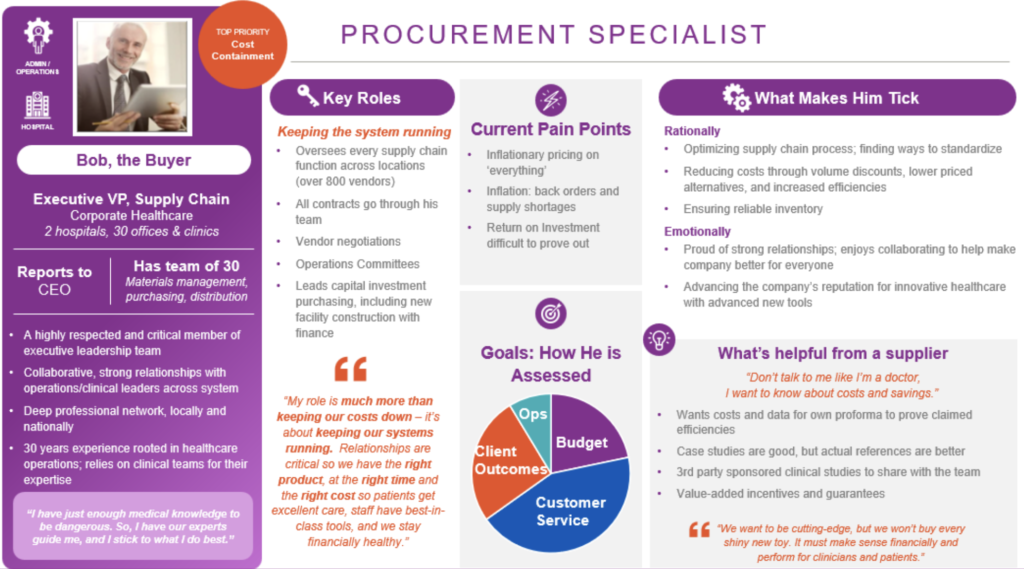
Making Consumer Personas Interesting
The goal is to bring the consumer to life in an interesting and inspirational way. This information needs to be interesting and easy to read so that it gets internalized by the organization. Here are a few tips:
Keep it Brief: A good persona should be 1 to 3 pages in length. Ideally, there would be a 1-page summary and if needed, 1 to 2 follow-up pages with actionable details and insights.
Use Visuals: A persona should be visually interesting. Use photos, graphics, or infographics to bring the consumer persona to life and make them feel more tangible and relatable to your team.
Use Narratives and Quotes: Storytelling is an important part of building your persona. Use the data to create a short 1-paragraph narrative that describes the consumer persona – who they are, what they need, and their underlying motivations.
Include a Key Consumer Insight: It is important to include a one-sentence insight that describes the underlying motivation that would make them potentially interested in buying your product or service.
With the data summarized and visualized into clear and succinct personas, it is easy to understand and empathize with your consumer target, i.e., the segment of consumers that will inspire your growth ideas, marketing communications, promotions, distribution plans and new product innovation. Your team can now tailor brand messaging, content, and product offerings to align with the needs and preferences of key consumer targets. It is also easy to socialize the learning across the organization and agency partners in an efficient and effective way.
Maintaining Relevance of Consumer Personas
Consumer personas are foundational marketing and insights deliverables that will inspire your teams’ growth ideas and guide your agency partners for years. For this reason, you need to invest in ongoing maintenance to ensure continued relevance to your organization. Depending on the volatility and competitive dynamics within your market, you will want to:
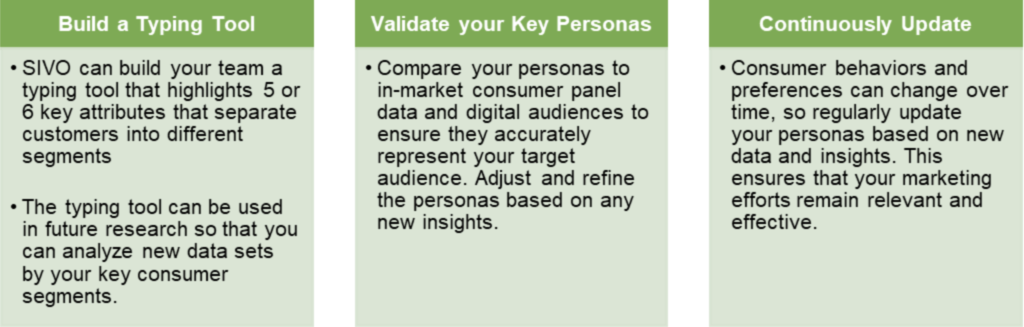
The success of your consumer persona profiles depends on the quality of your research, the depth of your understanding and getting it to land within your organization and with agency partners. Regularly leveraging the personas while also iterating and improving upon them will help you stay in tune with your consumers and maintain a competitive advantage in the market.
Your Source for Expert Customer Insights
At SIVO Inc., we are dedicated to helping our clients understand their consumer targets by designing and executing consumer segmentations, following up with qualitative research and building consumer personas. We can then facilitate activation sessions with your team to develop action plans and strategies that leverage these insights.
Reach out to us at Contact@SIVOInsights.com or go to SIVOInsights.com today to schedule a discovery call and connect!
by Cindy Blackstock
Have you had a conversation with your consumer?
It is an enlightening and humbling experience to really get to know who they are, what they think, how they experience your product or service, and what they need from that experience. It can be very beneficial to be face to face, having conversations with consumers to build your intuition and empathy. However, often it is more valuable to leave the interviewing to expert moderators, allowing you to focus on the answers, rather than how to pose the questions.
Why Use Experts Qualitative Research Moderators
Expert qualitative research Moderators are skilled at conducting qualitative research to uncover the “why” behind the “what” of consumer behavior and preferences. Experienced Moderators apply a range of specific research techniques, with nuance and finesse, to get beyond consumers’ top-of-mind thoughts. This allows them to identify the underlying needs and motivations that drive behaviors and choices.
Specifically, Moderators can help teams across four key learning dimensions:
Moderation Techniques Enable Insights to Surface
With certifications from organizations such as, RIVA, QRCA, and the Insights Association, great Moderators have a broad toolkit, employing specific qualitative research techniques to achieve their research objectives. These research techniques include:
Open-Ended Questions: Starting with open-ended questions that encourage participants to provide detailed responses. These questions typically begin with phrases like “Can you describe…” or “Tell me about…”
Comparative Questions: Asking participants to compare or contrast different aspects of their experiences or opinions. For example, “How does this compare to your previous experience in a similar situation?”
Timeline and Sequencing: Exploring the chronological aspects of experiences by asking participants to recount events in a specific order. This can help create a detailed narrative.
Sensory Exploration: Encouraging participants to describe sensory aspects of their experiences, such as what they saw, heard, felt, or smelled during a particular event.
Metaphorical or Analogical Questions: Asking participants to describe their experiences using metaphors or analogies. This can help participants express complex concepts more vividly. For example, “If this brand was a shoe, what kind of shoe would it be and why?”
Projective Techniques: Using projective techniques like storytelling, drawings, or role-playing to access participants’ subconscious thoughts and feelings.
Whether it is through in-depth interviews, in-context missions, ethnographic research or through online community bulletin boards, great Moderators will employ these techniques to discover underlying insights about the consumer that they could not otherwise articulate through simple conversations.
Trust SIVO with your Qualitative Research
Contact SIVO, Inc. at Contact@SIVOInsights.com to discuss how SIVO can provide you with the insights you need, via our team of expert Moderators to lead your qualitative research projects. Also, check out SIVO’s On Demand Talent Profiles to learn more about how a fractional Qualitative Research Strategist/Expert Moderator can be an asset to you and your team.
SIVO Insights brings together research, talent, and intelligent technology to help organizations navigate complexity with confidence. Have a business challenge? Let's talk!
We bring together research, talent, and intelligent technology to help organizations navigate complexity with confidence